What is so far the only organization of Asian liberals and democrats had its beginnings in another continent, and over bottles of beer. It was in the early 1990s, and an international conference of liberals was being held at Portugal’s picturesque coastal town.
As Filipino liberal politician – Florencio Abad recalls it, he and a couple of other delegates from Taiwan and Thailand felt like taking a break from the official proceedings. Intending to unwind over a few drinks, they motored down to Lisbon with a German colleague, where they found a restaurant to their liking. What was supposed to be a night of relaxation, however, soon became an evening of serious musings.
It turned out that the Asians had been feeling rather out of place at the conference, where the issues being talked about were so far removed from those that concerned their countries. There was, Abad would say later, simply no Asian agenda being discussed.
By the time the small group returned to Sintra, the idea of forming a new organization — one that would be exclusively for Asian liberals – had already been discussed with enthusiasm. After all, there was increasing agitation for democratic reforms across Asia at the time. Just a few years before, a bloodless “People Power” revolution had toppled a military-backed dictatorship in the Philippines. This had apparently inspired the citizens of other countries in the region, which was pockmarked with authoritarian regimes, to speak up as well. More and more peoples who had been oppressed for decades were suddenly rediscovering their voices. Some regimes responded to this with brutality, but there were also those which had begun to relax their grip, allowing a small, yet significant, breathing space for democratic initiatives. To the Asian liberals then at Sintra, it made perfect sense to offer support to the growing pro-democratic forces in the region. One way to do this, they thought, was to set up an organization that would act as a forum for liberal and democratic ideas in Asia. This would not only encourage a common understanding of the basic principles of liberal democracy, but would also help the liberals form appropriate responses to problems.
For the next two years, concept papers flew across the region as the proponents of the proposed organization exchanged thoughts on how to go about setting it up. Liberals from other Asian countries also joined in the discussions. But it still took a while to get everything on track because, observes Abad, “Asians are not used to getting together. (They) were relating more to their former colonizers. There was very little interaction among Asians. We were not developing leaders who were thinking Asia. They were just thinking about their own country and that was it.”
What kept them going, though, was the awareness that for all the differences in their countries’ situations, there existed a vast common ground on which they could work together. At the very least, they were part of a region that happened to be the most exciting arena in terms of democratic development – even though it was also home to some of the most repressive regimes.
Sukhumbhand Paribatra of Thailand’s Democrat Party would also say later, “Many of us Asians share one another’s problems, and many of us are at a similar status of political, social, and economic development… (And) in terms of ideals, we talk the same language.”
Thus, on October 15, 1993, a preparatory meeting was finally organized in Taipei. The host, Taiwan’s Democratic Progressive Party, would become one of the founding members of the new group, along with the Democrat Party of Thailand, the Democratic Party of Korea, the Liberal Party of the Philippines, the Buddhist Liberal Democratic Party of Cambodia, and the Parti Gerakan Rakyat of Malaysia. There would be some debates over what to call the group (some thought “caucus” was more appropriate), but in the end the organization would be baptized as the Council of Asian Liberals and Democrats. It would also be decided that each party would take turns heading the Council, the change in chairmanship taking place every two years.
By December 1993, the group (then still called a “caucus”) was holding its inaugural general assembly in Bangkok, the occasion graced by then Thai Prime Minister Chuan Leekpai and Korean opposition leader Kim Dae Jung. Three months later, CALD had its first strategic planning session, also in Bangkok. By November 1994, CALD held its first major conference, which aptly enough concentrated on “Liberal Democracy in the Asian Context.” The conference which was held in Manila, had among its guests of honor: former Philippine President Fidel V. Ramos and then Jovito R. Salonga, Senate President and head of the Liberal Party of the Philippines.
CALD has since held major annual conferences, each concentrating on a timely topic, such as the political impact of the Asian economic crisis, globalization, official development assistance, migration and human trafficking, populism, ethnic and religious minorities, among others. Abad says the dialogues and the discussions that take place in CALD conferences give participants “a broader perspective of the issues,” enabling them to look at proposed policies in their respective countries with a more discerning eye.
Some of the conference papers have been collected and turned into books, all of which have been met favorably. The books – and the conferences – have helped raise awareness not only about CALD, but also about what it stands for. In late 2002, CALD and its activities gained even wider attention when it teamed up with the European Liberal Democratic Reform (ELDR) Party for a meeting on the common challenges for liberals and democrats in Asia and Europe. Held in the Korean parliament in Seoul, the meeting marked the start of other collaborations between CALD and the ELDR. In May 2003, then ELDR President Werner Hoyer was among the guests of honor at what CALD considers as a breakthrough conference in Sri Lanka – being the first CALD ever had in South Asia. Since 2004, CALD has held biennial conferences with its European counterparts through the Alliance of Liberals and Democrats for Europe (ALDE) Group in the European Parliament.
In between all these, CALD has been busy organizing workshops and seminars. These are aimed at honing and upgrading the political skills of youth/women leaders and pro-democracy supporters, as well as building the capabilities of the member parties. The workshops have included those on party/election management and political communication; for those with more specific needs, special workshops have been conducted, such as one on constitution-making for Burmese democrats.
The Council has also issued statements of support for those being denied their rights by their respective governments. But, says Abad, who was CALD chairman in 1999 to 2000, “we have gone from making statements to conducting actual visits, supporting their election campaigns – DPP in Taiwan, the (SRP Party) in Cambodia – visiting people in jail.” In addition, CALD members have gone to neighboring countries as observers during elections.
Former CALD Secretary General Bi-khim Hsiao of Taiwan remarked: “Over the years, members of CALD have developed a wide variety of common visions through close exchanges, conferences, workshops and visits. The issues raised and shared among our members have been timely, even visionary.”
It helps that unlike other regional groupings, CALD is composed of parties and individuals and not governments. Members of the Council are thus not restrained by government positions and official policies. Because of this, the group is allowed flexibility in its decisions and actions.
CALD, however, has not escaped having a few difficulties. The logistics of getting people together for a meeting, for instance, can get very complicated. The one-China policy adopted by some countries has also posed some problems for the group, its member parties and their representatives. Various circumstances have prompted Southeast Asian members to rethink the non-intervention policy observed in their sub-region. As observed by Sukhumbhand, former Thai deputy foreign minister and former CALD chairperson: “Certain issues have challenged our ingenuity and our ways of doing things.”
Indeed, while the Council’s members may have slightly different interpretations of liberalism, and democracy, tackling such issues has helped them sharpen their understanding of what binds them together, and underline the need for an organization like CALD. For sure, Sukhumbhand says, “we are not just voices in the wilderness, saying things that no one listens to.” The DPP’s recollection of what transpired in the Council’s second congress, held in Taipei in November 1995, is also telling of what kind of group CALD is: “Participants challenged the view espoused by certain Asian leaders…that democracy is a Western concept not suitable for Asian cultural traditions. While some representatives lamented over the unwanted competition of ‘who has the worst case’ of authoritarianism in their home country, others reported on successful strategies for overcoming obstacles. Throughout the discussion, there was a clear consensus that it is in the interest of sustained economic development that political freedom and civic rights are not denied to the people. The active, creative, and well-informed citizen who makes the economy thrive is unlikely to take…tutelage from the state.”
More than twenty years after the founding of CALD, Asia continues to host some of most oppressive governments in the world. Democracy, however, has made considerable inroads in the region. South Korea, for example, has not looked back at its authoritarian past after having its first democratically elected president in 1988. In 1998, then Indonesia’s President Suharto was forced to step down after three decades of iron rule. Two years afterwards, it was Taiwan’s turn to see someone from the democratic opposition finally lead the government.
As democratic reforms multiply in Asia, so too have CALD’s members. True, two of its founding member-parties — the Buddhist Liberal Democratic Party of Cambodia and the Democratic Party of Korea – have ceased to exist. The present CALD roster of member-parties, however, now includes the Singapore Democratic Party, Sri Lanka’s Liberal Party, the Indonesia Democratic Party of Struggle, Parti Gerakan Rakyat Malaysia, the Liberal Party of the Philippines, the Civil Will Green Party of Mongolia, the Democratic Progressive Party of Taiwan, the Democrat Party of Thailand, and the Cambodia National Rescue Party. CALD has also opened its membership to like-minded individuals, and regularly engages with non-member political parties from Myanmar, Indonesia, Japan, Kyrgyzstan and South Korea with which it shares the same democratic values.
“Through CALD, political parties, groups, and individuals have a continuing discussion on the developments occurring in the region. CALD events promote discussion and assess the possibilities for liberal solutions to the challenges that Asian democracies face”, says Mongolian parliamentarian and current CALD chairperson Oyun Sanjaasuren.
Joining CALD, says Sukhumbhand, is “not a question of need. It’s a question of opportunities. I think CALD provides good opportunities for liberals and democrats in Asia to exchange experiences learn from one another and inspire one another, even look after one another in some ways, and work together to propagate what we believe in.”
CALD member-parties attest to this. Sri Lanka’s Liberal Party, which is the group’s only member from South Asia thus far, says that it “has benefited in general from enhanced understanding of areas usually neglected in Sri Lanka, which has looked toward the West and the subcontinent, and previously looked to East Asia only for economic perspectives without understanding of the need for an open society to go with an open economy.”
Abad, for his part, says that being a member of CALD has helped the Philippines’ Liberal Party clarify supranational issues such as globalization and terrorism and the impact of these on local conditions. By being able to associate with distinguished democratic activists in the region, he adds, the party’s young leaders are now more able to think beyond Philippine borders.
More than being just a venue for discussions and debates, CALD also serves as a powerful voice for the oppressed. Nobel laureate and CALD Honorary Member Daw Aung San Suu Kyi, for one, said: “While I was incarcerated, CALD has been a consistent voice calling for my release and more importantly, for the restoration of freedom and democracy for Burma. Much work remains to be done and the solidarity of organizations like CALD is vital in our struggle. Aside from Burma, oppressive regimes still lord it over in many countries worldwide, including here in Asia. To CALD and its allies, please continue to use your freedom to promote ours.”
Similarly, former CALD chairperson and leader of the Cambodian opposition Sam Rainsy described CALD as “a candle that flickers during the darkest nights of Cambodia. CALD is international solidarity in action”
Not surprisingly, expectations on what CALD should do in the next decades are high. Comments on the Democratic Progressive Party, which is currently the ruling party in Taiwan: “Over the years, through active programming, CALD has grown and strengthened to become the main network of democratic parties in Asia. The DPP expects CALD to continue to play the role of fostering younger democracies by helping to fortify political parties and multi-party political systems.”
Given CALD’s rich history and clear vision of the future, there is no doubt that the organization is up to the challenge.

On 10–11 December, CALD held its inaugural General Assembly in Bangkok, Thailand with the then Thai Prime Minister Chuan Leekpai and Korean opposition leader Kim Dae-jung gracing the occasion. Dr. Surin Pitsuwan, who would later become an ASEAN Secretary General, was chosen as the founding chair of CALD. While founded in Bangkok, CALD’s origins can be traced to Sintra, Portugal when Asian legislators from the Philippines, Taiwan, and Thailand, on the sidelines of the seminar they were attending, came up with the idea of having a forum where liberal and democratic ideas in Asia can be discussed.

The conference, “Asian Political Crisis: Political Responses to the Problem,” was held in Bangkok, Thailand on 18–20 October with the Thai Deputy Prime Minister Bichai Rattakul. The conference proceedings became a book, Political Dimensions of the Asian Crisis.
In a move to better institutionalize CALD’s operations, Manila was designated as the permanent secretariat by the CALD Executive Committee at its meeting held on 25–27 November

The conference “Political Dimensions of Globalization: An Asian Perspective” was keynote[d] by then Philippine Vice President Teofisto Guingona. Held on 15–20 November in Manila and Subic Bay Freeport, Philippines, the proceedings of the conference became the book, 9–11 and Political Freedom: Asian Perspectives.
CALD and its activities gained even wider attention when it worked with the National Democratic Institute for International Affairs for a workshop on “Political Party Strategies to Combat Corruption” in Bangkok, Thailand on 14–16 January. The background research for the workshop was published a year after in the book, Political Parties in Asia.
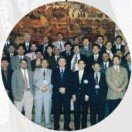
The inaugural CALD Political Communications Workshop was held in Manila, Philippines on 8–12 April. Since then CALD held eight more workshops in the series, the last one took place in June 2017 in Phnom Penh, Cambodia.


CALD commemorated its 10th Founding Anniversary with a conference in Bangkok, Thailand on 9–12 December with former Thai Prime Minister Chuan Leekpai, then Thai Deputy Prime Minister Bhokin Bhalakulata, then Thai Foreign Minister and CALD Founding Chairperson Surin Pitsuwan, then Friedrich Naumann Foundation Chairperson Count Otto Graf Lambsdorff and then Liberal International Deputy President Lord John Alderdice.
The Liberal International Asia Conference, a joint project with Liberal International and the Democratic Progressive Party of Taiwan, was held in Kaohsiung, Taiwan on 4–6 March. During this occasion, the chairmanship of CALD was transferred from the Democrat Party of Thailand to the Democratic Progressive Party of Taiwan with Taiwan President Chen Shui-bian serving as the chairperson of CALD, the first (and only) time that an incumbent head of government served as CALD Chairperson.

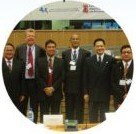
The first biennial meeting between Alliance of Liberals and Democrats for Europe and CALD was held in Brussels, Belgium on 9–12 November, focusing on the social, political, and economic challenges of Europe and Asia. The meeting, which alternated between Europe and Asia, returns to Asia this 2018.
The LI Women’s Conference and CALD General Assembly was held on 12–15 October in Taipei, Taiwan with the theme “Advancing Women in Politics: The Role of Political Parties.” The event led to the formation of the CALD Women’s Caucus in 2006 with Philippine parliamentarian Henedina “Dina” Abad as founding chairperson.
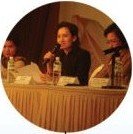

The ALDE-CALD-LI Meeting, gathering of more than a hundred eminent liberal leaders worldwide, was held in Manila, Cavite-Tagaytay, Philippines on 21–24 June. The event was keynote[d] by democracy icon, Former Philippine President Corazon “Cory” Aquino.
The inaugural CALD Party Management Workshop was held in Jakarta, Indonesia on 4–7 February. Since then, six more workshops in the series were conducted, the last one took place in Taipei, Taiwan in June 2018. In 2012, the best practices drawn from these workshops were published as the CALD Party Management Handbook entitled Freedom to Organize.
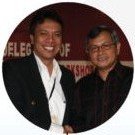
The first CALD-Red Liberal America Latina (RELIAL) Meeting and Liberal Regional Networks Meeting were held in Belfast, Northern Ireland on 17 May under the auspices of the 55th Liberal International Congress. Since then, regional networks meeting has become a regular feature in Liberal International Congresses.
CALD held its 15th Anniversary Conference in Bangkok, Thailand on 27–30 March with Thai Prime Minister and Democrat Party Leader Abhisit Vejjajiva as keynote speaker. The occasion also marked the entry of former Indonesian President Abdurrahman Wahid or “Gus Dur” as CALD’s third individual member.

The CALD Youth Caucus Workshop in Kaohsiung, Taiwan on 17–21 August resulted in the formation of CALD’s youth arm – the Youth Council of Asian Liberals and Democrats or CALD Youth.
CALD co-organized Liberal International’s 57th Congress held in Manila, Philippines on 16–20 June – the first one to be held in Asia.

CALD convened in Bangkok, Thailand on 28 November–1 December to launch its multi-year Climate Change Programme through the workshop “Setting CALD’s Climate Change Agenda.” Follow-up activities resulted in the adoption of CALD Climate Change Statement in 2012, publication of CALD Climate Change Handbook in 2014, and release of CALD Climate Change Educational Video in 2015.
CALD commemorated its 20th Founding Anniversary with memorable celebrations in Manila, Philippines on 8–11 November. Attended by then Philippine Senate President Franklin Drilon, Liberal International President Hans van Baalen, Alliance of Liberals and Democrats for Europe’s Sir Graham Watson, Friedrich Naumann Foundation’s Chairman of the Board of Trustees Juergen Morlok, and then Secretary General of Community of Democracies Maria Leissner, some of these deserved the events became part of the commemorative book, 20 Speeches that Define Asian Liberalism and Democracy.

As a follow-up to its previous initiatives on climate change, CALD assembled a delegation for an Observation Trip to Typhoon Haiyan-Devastated Areas in Leyte, Philippines on 1–5 May. The trip was organized as a part of the continuing effort to provide assistance to the victims of the super typhoon, and to promote awareness of climate change impacts. The highlight of the trip was when participants had the chance to visit the beneficiaries of the 30 CALD-sponsored transitional shelters.


Some 200 liberals from all over the world convened in Hong Kong on 7–10 November for the CALD-LI-EFN-FNF Conference on Liberalism. Held while the “umbrella movement” was underway, the event provided the participants with an opportunity to interact and show solidarity with Hong Kong’s vibrant democratic forces. Three years after, CALD Youth returned to Hong Kong for the inaugural CALD Youth Political Academy (CYPA) with “umbrella movement” activists Martin Lee, Joshua Wong and Nathan Law as special guests.
CALD, together with International Federation of the Liberal Youth and Liberal International, organized a side-event, “COP 21 and the Liberal Agenda,” on 6 December, during the historic 2015 UN Climate Change Conference or COP 21 Summit in Paris, France.

CALD participated in an Election Observation Mission on 13–17 January which witnessed the historic victory of the Democratic Progressive Party in Taiwan’s presidential and parliamentary elections. DPP Chairperson Tsai Ing-wen became the first woman to be elected as President of Taiwan.
CALD held a consultative meeting on the Liberal Manifesto on 24–27 February in Bangkok, Thailand, where the outcomes of which were submitted to Liberal International for consideration. On 18–21 May, a CALD delegation joined liberals and democrats all over the world for the 70th Anniversary of Liberal International in Andorra.


The CALD Women’s Caucus major conference on 10–14 August with around 200 attendees in Taipei, Taiwan and with no less than President Tsai Ing-wen and former Vice President Annette Lu as special guests. The conference led to a follow-up visit of a CALD Women’s Caucus delegation to Manila, Philippines on 31 August to personally convey their support to detained Philippine Senator Leila de Lima.
On 17–21 November, CALD returns to Bangkok, Thailand for its 25th Founding Anniversary which will be keynoted by Philippine Vice President Maria Leonor “Leni” Robredo. CALD chose the theme, “Reclaiming Democracy, Rebuilding Society,” for its 25th founding anniversary based on the belief that the process of consolidating democracy, of making it “the only game in town,” necessitates the building of strong institutions.
Keep up to date by subscribing to our newsletter